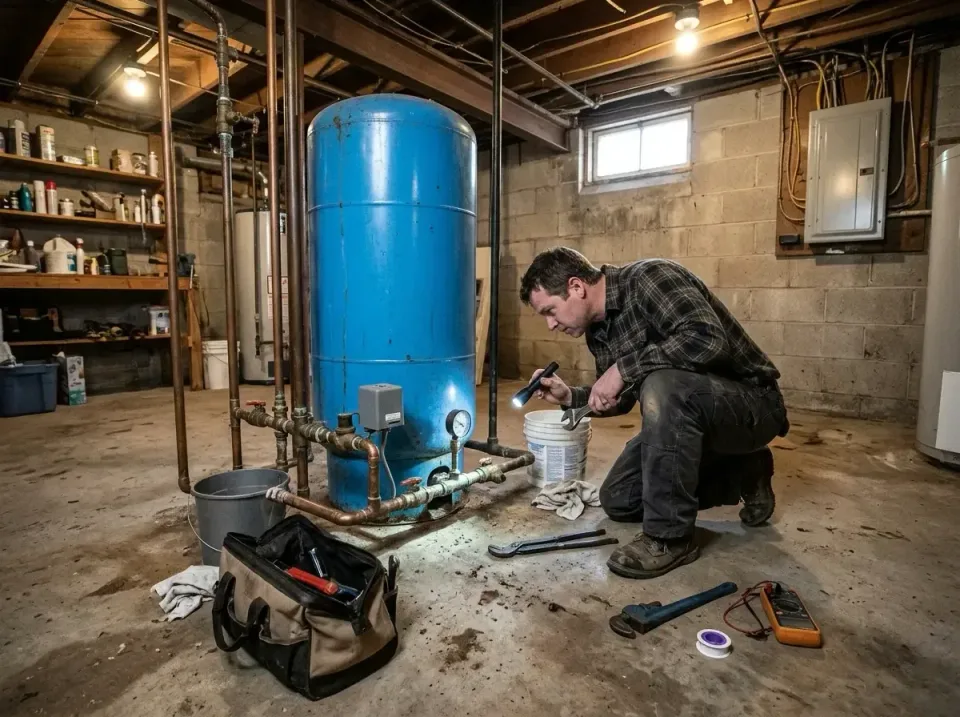
Water Pressure Tank Repair
We repair potable-water pressure tanks for homes, checking tank size and connections; replacement commonly runs $800–$2,500, driven by tank size and installation access.
A weak shower or slow-filling washer can mean a pipe is partly frozen, but a frozen pipe is only one possible cause of low water pressure. If several fixtures fade at once, the restriction may be on a shared line; if pressure is low everywhere, the pump or pressure equipment may also need checking. Take note of which fixtures are affected and whether flow changes over time.
Interior Alaska’s extreme winter cold can freeze piping in exposed or poorly heated spaces, turning a small flow restriction into a burst-pipe risk if the ice expands. Along the Alaska Highway, long stretches between communities can make advance winter access planning important when a repair requires equipment or parts.
Even near the Alaska Native Heritage Center, where homes are part of Anchorage’s varied built environment, the pipe’s location and protection matter more than the neighborhood name. Don’t force the line open. We inspect the affected route and pressure system before recommending a repair.
Yes a pipe that is partly frozen can restrict water flow and reduce pressure at fixtures beyond the blockage. A complete freeze may stop flow altogether, and expanding ice can split a pipe before it thaws. If only one faucet is weak, the restriction may be close to that fixture; if several fixtures lose flow together, check whether they share a branch or supply route.
In our field work, the symptom alone does not prove the pipe is frozen. We compare flow at affected and unaffected fixtures, inspect accessible piping, and check pressure equipment rather than replacing parts on a guess. A leak may become visible only after ice melts, so watch for damp flooring, dripping, or an unexplained increase in water use.
Near the University of Alaska Fairbanks, severe seasonal conditions make it especially important to identify whether a pipe runs through a cold crawlspace, garage, or utility area. A warmer indoor day does not guarantee the pipe itself has thawed; the coldest section may be hidden behind insulation or a wall.
Freeze-thaw cycles stress buried pipes and foundations, so a pressure problem that appears during a thaw can point to shifting or damaged lines, not just ice inside a house. We look for changes in flow and signs of leakage before deciding whether the trouble is a frozen section or a line needing repair. The Anchorage Alaska Railroad Depot is a useful reminder that Anchorage has older and newer settings; age and construction can affect access, but an on-site inspection is what identifies the actual cause.
A single slow faucet with no leak signs may justify a simple check: confirm the fixture is fully open and see whether other taps work normally. Do not use an open flame, torch, or high heat on piping. If you hear water running behind a wall, see water damage, or have no flow at several fixtures, stop and seek professional help; keep clear of wet electrical areas.
Southeast Alaska’s maritime, rainy climate does not remove freeze risk: cold snaps can still affect exposed or poorly heated piping. The Alaska State Capitol sits in a region where building conditions differ from Interior homes, so a repair plan should fit the actual property rather than assume one statewide pattern. Our crew traces the pressure loss and inspects accessible lines before recommending thawing or repair.
The University of Alaska Anchorage serves a campus in a city with different housing types and plumbing layouts. That matters because a cold line in an exterior wall, crawlspace, or utility room calls for a different inspection path than a pressure problem at the well equipment.
Near the Alaska SeaLife Center, coastal conditions and the building’s plumbing layout both deserve attention; a pressure drop should not automatically be blamed on frozen pipe. We test whether the symptom is limited to one branch or affects the broader supply, then explain what the findings show.
For a separate example of a one-fixture problem, read why an upstairs shower may have weak pressure in Anchorage. A careful diagnosis saves a homeowner from thawing the wrong line.
The right repair depends on whether ice blocks a pipe, the well equipment cannot maintain pressure, or a line has been damaged. A spring inspection near the Anchorage 5th Avenue Mall should include checking accessible lines for signs of movement or leaks, since spring thaw can uncover water-line damage that was difficult to see while the ground was frozen.
The Anchorage Museum is another familiar city reference, but nearby landmarks do not establish what is wrong inside a home. Access and test results do.
| Option | Best for | Key detail |
|---|---|---|
| Frozen-line inspection and thawing | Localized flow loss on a cold pipe route | Common household pipe sizes are 1/2–1 inch; safe access matters. |
| Well pump pressure diagnosis | Low flow across several fixtures | Pressure switch settings commonly include 30/50 psi. |
| Pressure tank assessment | Pressure changes during use | Residential tanks range from 20–86 gallons; capacity is not drawdown. |
| Water line leak inspection | Pressure loss with damp areas or unexplained water | Spring ground movement can reveal damage; excavation access affects repair. |
Western Alaska coastal storms can disrupt service access, so homeowners in remote areas should mention access constraints when arranging an inspection. The Eagle River Nature Center is a regional landmark, not a measure of travel time or site access.
If your washer fills slowly after a cold night, start by noting which other fixtures have weak flow and whether you see any water where it should not be. Don’t adjust pump controls or try to thaw a concealed pipe with a flame.
Confirm the affected fixtures: Run a faucet briefly and record whether other taps lose flow at the same time.
Check for visible leaks: Look around accessible pipes and the utility area; stop if water is near electrical equipment.
Locate the equipment: Identify the wellhead, pressure tank, shutoff, and crawlspace or utility-room access.
Clear a safe route: Move storage and protect floors along the path to the equipment.
Plan winter access: Long winters increase frozen-pipe and well-system risks, so clear snow around outdoor equipment without striking buried or exposed lines.
Mention site conditions: Snowmelt can raise groundwater around basements; report standing water or damp areas before work begins.
Allow a water interruption: Ask how long water may need to be off during inspection or repair.
Coastal humidity and salt air accelerate corrosion, so tell the plumber if fittings or equipment show visible rust. If the route is difficult to find, nearby references such as Fairbanks International Airport or Hatcher Pass can help explain the service area, but give the actual property location when scheduling.
Yes, a frozen pipe can reduce pressure at one faucet if the blockage is on the branch serving it. Southeast communities receive substantial year-round rainfall, but rainy weather does not rule out a cold, exposed pipe; compare nearby fixtures and watch for leaks as the line warms.
A pressure diagnosis is $100–$300, covering testing and travel; if a damaged water line needs repair, the listed range is $400–$3,000, depending on excavation and pipe access. Alaska Plumbing Pros can inspect the line and explain which scope applies before recommending work.
No, do not use a torch or open flame to thaw a pipe, especially if it is concealed or near wiring. A homeowner can note which fixtures are affected and check for visible leaks, but a burst, inaccessible pipe, or pressure loss across several fixtures calls for professional Frozen Pipe Repair.
Anchorage plumbing permits require checking requirements before alterations, and the Alaska Plumbing Code applies to plumbing installation work. If pump wiring is involved, Anchorage electrical permits may require approval; confirm the scope before work begins.
Yes, a frozen line and a well-system fault can both make several fixtures lose flow, so testing helps separate them. Near Pioneer Park or the Skagway Historic District, a home’s setting alone cannot identify the cause; if the pipe is clear but pressure remains low, ask about Well Pump Repair and a pressure-system check.
A frozen pipe can reduce flow, but a pump, tank, damaged water line, or another restriction can cause similar symptoms. If flow is weak at several fixtures, the line shows a leak, or pressure does not return after conditions warm, arrange an inspection rather than repeatedly adjusting equipment. A useful comparison is a pressure reading under both static and flowing conditions; a single gauge reading may not explain what happens during use.
Denali National Park and Preserve, Gates of the Arctic National Park and Preserve, and Nome Airport reflect how widely Alaska’s service settings vary; access and site conditions matter when planning work. Alaska Plumbing Pros can inspect the affected piping and pressure system, explain the findings, and recommend a repair suited to your home. For help with a suspected frozen line, request Frozen Pipe Repair or call (877) 773-0781.
Yes, a frozen pipe can reduce pressure at one faucet if the blockage is on the branch serving it. Southeast communities receive substantial year-round rainfall, but rainy weather does not rule out a cold, exposed pipe; compare nearby fixtures and watch for leaks as the line warms.
A pressure diagnosis is $100–$300, covering testing and travel; if a damaged water line needs repair, the listed range is $400–$3,000, depending on excavation and pipe access. Alaska Plumbing Pros can inspect the line and explain which scope applies before recommending work.
No, do not use a torch or open flame to thaw a pipe, especially if it is concealed or near wiring. A homeowner can note which fixtures are affected and check for visible leaks, but a burst, inaccessible pipe, or pressure loss across several fixtures calls for professional Frozen Pipe Repair.
Anchorage plumbing permits require checking requirements before alterations, and the Alaska Plumbing Code applies to plumbing installation work. If pump wiring is involved, Anchorage electrical permits may require approval; confirm the scope before work begins.
Yes, a frozen line and a well-system fault can both make several fixtures lose flow, so testing helps separate them. Near Pioneer Park or the Skagway Historic District, a home’s setting alone cannot identify the cause; if the pipe is clear but pressure remains low, ask about Well Pump Repair and a pressure-system check.
Browse all nationwide service options and choose the right fit for your project.
We repair potable-water pressure tanks for homes, checking tank size and connections; replacement commonly runs $800–$2,500, driven by tank size and installation access.
Booster Pump Repair covers pump diagnostics and component fixes for homes with inconsistent supply; typical repairs run $300–$1,200, depending on parts and diagnostics.
Well Pump Repair covers pump testing and repairs for homes, with replacement costs of $1,200–$4,500 depending on pump depth and type.
We repair leaking water lines for homeowners and contractors, including accessible pipe sections and excavation; repairs commonly run $400–$3,000 depending on pipe access.
Frozen Pipe Repair for Alaska homes includes locating and safely thawing frozen pipe sections; access, pipe material, and any split line affect the job scope.
We repair residential pressure regulators, checking valve condition and system readings; access and regulator size shape the job, typically $150–$400.
We diagnose sudden household pressure drops, testing flowing and static readings and system controls. Typical diagnostic visits run $100–$300, depending on testing and travel.
We repair or replace household shutoff valves, including accessible copper and PEX connections; typical jobs run $150–$500 depending on access and valve condition.
Clear clogged residential water lines and inspect accessible pipe sections; typical jobs run $250–$1,500, with price driven by blockage and access.
We repair well pressure switches for homeowners, including switch and wiring access; typical replacement runs $200–$600, depending on access.
Goulds Well Pump Repair covers residential pump diagnosis and component repairs; access, pump depth, and parts availability shape the job cost.
We repair residential water softeners, including control and resin-bed issues; diagnostic work is $100–$300, depending on testing and travel.
Shallow Well Pump Repair covers pump, foot-valve, and check-valve faults for private-well homes; access, pump type, and well depth shape the job cost.
Sediment Filter Replacement clears packed grit from residential filter housings; typical cartridge jobs run $150–$450, depending on filter size and access.
Air-in-line diagnosis and repair for Alaska homes, including accessible water-line checks; typical service runs $150–$500, depending on access and repair scope.
Submersible pump repair for Alaska homes includes well-depth and pump checks; replacement work typically runs $1,200–$4,500, depending on depth and pump type.
Grundfos Booster Pump Repair in Alaska: diagnose pump faults, inspect controls, and repair components. Call (877) 773-0781 for a scope review.
Select a city to find local low water pressure repair providers we cover in Alaska.
Share your job scope for low water pressure repair in Alaska — we will review fit and pricing before scheduling.