Local System Knowledge
Well pumps, pressure tanks, regulators, and frozen lines are familiar parts of plumbing work around Anchorage. The crew uses that local experience to focus on likely causes and explain what the system needs.
Spring thaw can expose shifted or damaged water lines in Anchorage, so a pressure drop that appears after snowmelt deserves a careful line and pressure-system check. Heavy snowfall can also bury or obstruct outdoor equipment, making a covered wellhead harder to inspect; keep its access path clear when it is safe to do so. Near the Anchorage, AK Native Heritage Center, our crew checks the system before recommending a repair.
We diagnose low flow in Anchorage homes by comparing pressure at fixtures and inspecting accessible controls, piping, and water equipment. Alyeska and Glen Alps are part of our local coverage, and the property’s layout and equipment access shape the visit. Our team explains what we find before making a repair, whether the pressure problem affects one fixture or several.
For more than 11 years, we have worked on Anchorage plumbing systems through seasonal changes.
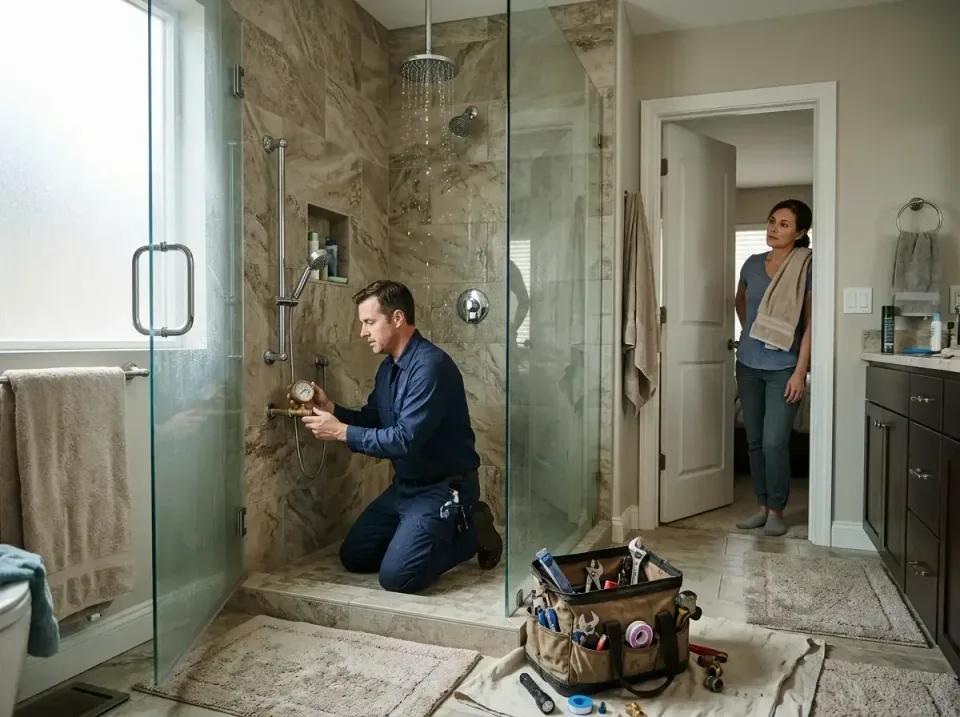
Near the Anchorage Museum at Rasmuson Center, Anchorage properties range from established homes to newer construction, and low pressure can have different causes in each system. Freeze-thaw cycles can stress buried pipes and foundations; our team checks for visible signs of line trouble before focusing on pump controls or fixtures. Snowmelt may raise groundwater around basements, so tell us if pressure changes coincide with water near a basement or foundation.
We schedule local visits, inspect the pressure system, and explain the cause and repair options in plain language. Coastal humidity and salt air can accelerate corrosion on exposed components, so we look for corrosion where piping and fittings are accessible. We will recommend work suited to the home, not replace parts without diagnosis.
A shower that weakens upstairs or a washer that fills slowly calls for a pressure check at more than one fixture. In Anchorage, long winters can increase frozen-pipe and well-system risks; our crew checks accessible piping and equipment before settling on a cause. You can safely compare whether a nearby cold-water tap also runs weakly, without opening equipment or electrical controls.
If pressure surges and fades, we measure the system under static and flowing conditions and inspect accessible controls. Coverage includes ZIP codes 99577, 99567, 99540, 99587, 99504, 99507, 99505, 99516, 99508, 99506, 99501, 99518, 99515, 99513, 99517, 99530, 99502, 99503, 99509, 99510, 99511, 99514, 99520, 99521, 99522, 99523, 99524, 99529, and 99599.
At Lake Hood Seaplane Base, exposed equipment and its access can face Anchorage’s changing weather; on a service visit, we check accessible outdoor components for damage before tracing a pressure fault indoors. High winds can damage exposed plumbing components, so homeowners can visually check for loose or visibly damaged exterior piping from a safe location. Do not climb onto snow or handle electrical equipment.
Near Kincaid Park, our team focuses on the home’s actual pressure readings, accessible lines, and equipment condition. If low flow continues across multiple fixtures, we can inspect and explain the next repair step.
Before altering plumbing in Anchorage, verify permit requirements with the Municipality of Anchorage Development Services Department; skipping a required permit or inspection can leave work undocumented and complicate later repairs. Our team checks the local requirements that apply to the planned alteration and explains the work before proceeding.
Anchorage electrical permits may also be required when a pressure-system repair involves pump wiring, so we do not treat electrical work as part of ordinary pipe repair. The Safe Drinking Water Act protects public water systems, and the EPA Lead and Copper Rule applies to those systems; neither replaces the code and permit checks for a home’s plumbing. A pressure problem near the Anchorage Museum still needs a property-specific diagnosis.
Get a practical diagnosis from a crew familiar with Anchorage homes and Alaska water systems.
Well pumps, pressure tanks, regulators, and frozen lines are familiar parts of plumbing work around Anchorage. The crew uses that local experience to focus on likely causes and explain what the system needs.
Technicians check the pump, pressure switch, tank, regulator, and water lines before outlining a practical repair plan. You can discuss the recommended work and agree on its scope before repairs begin.
The team coordinates service from Anchorage and schedules across Alaska based on location, weather, and parts availability. Clear communication about these factors helps set practical expectations for service timing.
The crew checks the system, explains the findings, and verifies water flow after repairs.
Discuss Access
When you call, the team asks about the property location and water access, then confirms well power and access needs before dispatch. This helps prepare for the site and its water system.
Inspect Components
A technician locates the shutoff valves and pressure tank, then checks the pump, switch, regulator, and water lines. You get a focused inspection of the parts that affect system pressure.
Diagnose Pressure
The technician records pressure readings before adjusting any switch settings and keeps pump circuits off during electrical inspection. The findings clarify the cause and inform a practical repair plan.
Repair And Verify
After discussing the repair plan, the technician completes the agreed work and protects exposed piping from freezing during service. Water flow and system cycling are checked so you can see how the system operates.
A washer that fills unusually slowly can be an early clue that water delivery is restricted. Notice whether the change continues across uses, and share which fixtures are affected when discussing the system.
Pressure that surges and then fades can point to an inconsistent water supply. Pay attention to whether the change happens at one fixture or across the home; that detail helps describe the pattern.
When several fixtures lose flow together, the cause may involve a shared part of the water system rather than one faucet. Note which areas are affected and whether the change is persistent.
Freeze-thaw cycles can make spring a useful time to check exposed water lines and system performance. If pressure has changed, a technician can inspect the pump, tank, regulator, and lines and explain what needs attention.
Cool, short summers offer a practical window to address pressure concerns and check accessible plumbing. A technician can assess the well system and water lines, then help plan repairs around location and parts availability.
As temperatures begin to shift, checking pressure and exposed piping can help identify work to address before colder weather. The technician can inspect system components and protect exposed piping from freezing during service.
Long snowy winters and freezing conditions can affect exposed piping and service access. A pressure inspection can identify system concerns, while the crew considers weather and location when scheduling and protects exposed piping during work.
Ask which permits may apply to the planned plumbing work and who will handle them. Knowing this upfront helps you understand what approvals are needed before work begins.
Ask which inspection and repair tasks are included, and which are outside the proposed scope. A clear description helps you compare the work being offered and agree on what will be done.
Ask whether the technician needs access to the well, pump, pressure tank, shutoff valves, or electrical areas. Confirming access needs ahead of service helps prepare the property.
Review the written terms for the agreed work, scheduling expectations, and any conditions that could affect the job. Clear terms help you understand the arrangement before authorizing service.
Request a quote online or contact our Anchorage, AK team directly by phone or email.
Compare its flow with a nearby fixture and note whether other taps weaken at the same time. In Anchorage, our team checks pressure under flowing conditions and inspects accessible equipment before identifying a cause; avoid opening pump controls yourself.
See whether both hot and cold taps are affected, and check that an accessible shutoff handle has not been partly turned. Near Alyeska, our crew can assess the pressure system and accessible piping if the loss continues.
Yes. Snow and seasonal thaw can complicate access to outdoor equipment and may expose line damage. Keep the route to equipment clear when safe, and have our team inspect persistent pressure changes rather than digging or opening electrical controls.
Low Water Pressure Repair is also available in these nearby communities across Alaska.